Custom Real Estate Portal vs Generic Plugins and Templates
Most real estate websites in Dubai break under real listing volumes. Here is what separates a custom property portal from a generic plugin-based solution.
Most real estate websites in Dubai break under real listing volumes. Here is what separates a custom property portal from a generic plugin-based solution.
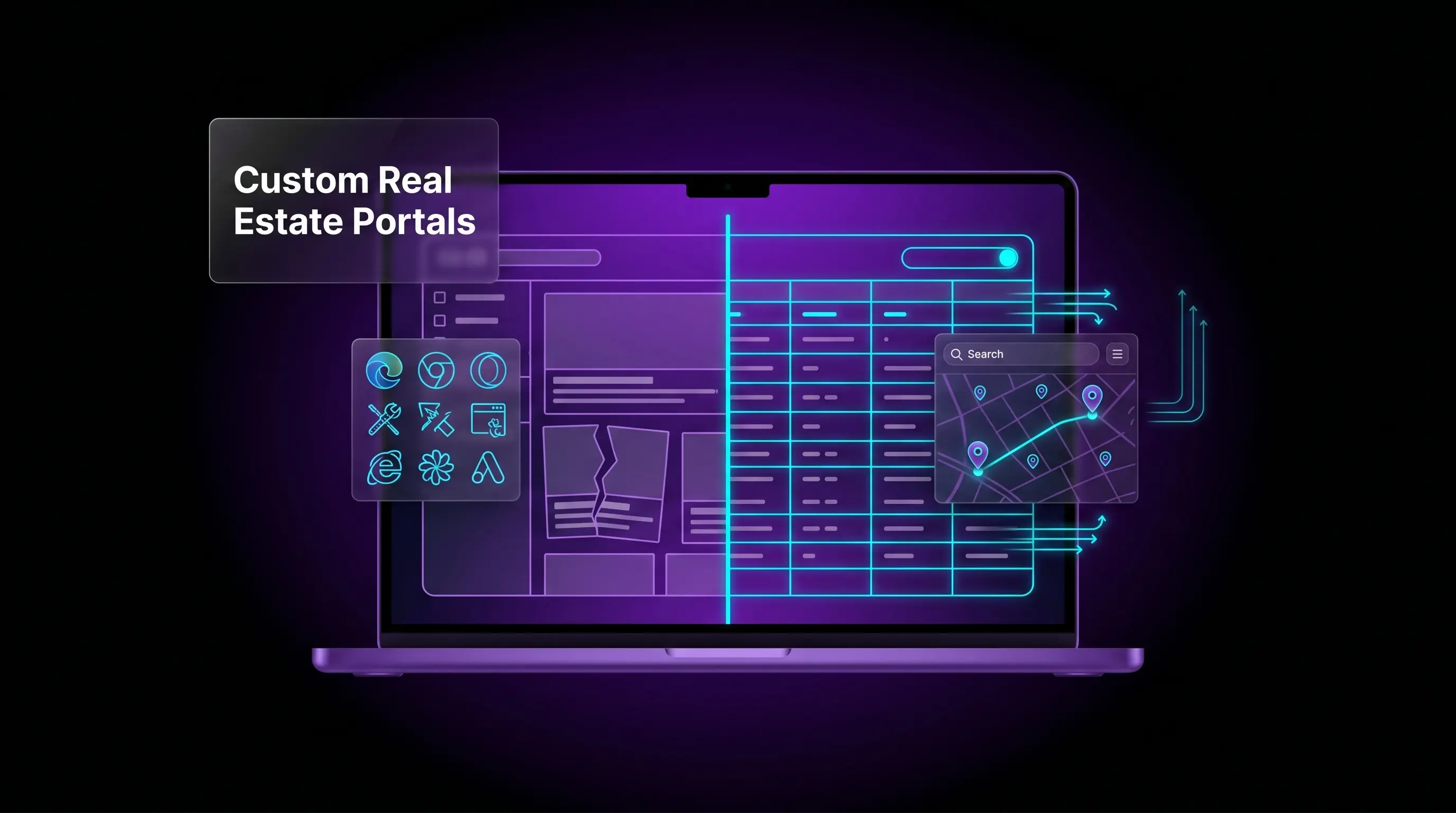
Real estate is one of the most competitive industries in Dubai. Buyers, tenants, and investors search online before making any decision, and the website they land on either gives them what they need or sends them to a competitor. For property businesses looking at real estate website development in Dubai, the choice between a custom-built portal and a generic plugin or template is not a minor technical detail. It directly affects how the website performs, how listings are managed, and whether the business can compete with established property platforms.
The majority of real estate websites built for agencies, brokers, and developers in Dubai use one of two approaches. The first is a WordPress theme designed specifically for property listings, combined with a plugin like WP All Import or a dedicated real estate plugin such as Houzez or RealHomes. The second is a generic website with a basic listings section added as an afterthought.
Both approaches work to a point. They allow the business to display properties, upload images, and include basic search functionality. The limitations become visible as the number of listings grows, as search requirements become more specific, or as the website starts to slow down under the weight of unoptimised images and plugin conflicts.
Generic plugins and real estate themes are built to cover the most common use cases across as many different businesses as possible. This makes them functional out of the box but creates specific problems for businesses with real operational requirements.
Speed and image handling are the most immediate issues:
A real estate listing typically includes 15 to 30 high-resolution photographs. A plugin that stores and serves these images without proper compression, without generating correctly sized versions for different devices, and without lazy loading will produce a page that takes eight to twelve seconds to load on mobile. Most visitors leave within three seconds. Every slow listing page is a lost enquiry.
Search functionality is the second major limitation:
Generic real estate plugins offer standard filters. Bedrooms, price range, property type, location. For a property portal serving Dubai, this is rarely enough. Buyers and tenants search by community, by building name, by view, by furnished status, by floor level, by handover date for off-plan properties. A plugin that cannot support these filters forces the business to compromise on the search experience or pay for expensive custom modifications to a tool that was not designed for them.
Data management creates the third problem:
A real estate business managing hundreds or thousands of listings needs a backend system that is fast, organised, and allows staff to update properties efficiently. Generic plugins add their own database tables and management interfaces on top of WordPress in ways that were not designed for high-volume property management. As the listing count grows, the admin interface slows down and data management becomes increasingly frustrating.
A custom-built property portal is designed around how the specific business manages and presents its listings. The database structure, the search filters, the image handling, and the admin interface are all built for the actual requirements rather than adapted from a generic tool.
Specific advantages include:
Image management built for property listings. A custom portal compresses and resizes images automatically on upload, generates the correct sizes for desktop, tablet, and mobile displays, serves them from a CDN, and implements lazy loading so that only the images visible on screen load immediately. The result is a listing page that loads in under two seconds regardless of how many photographs the property has.
Search filters that match how buyers actually search. Every filter relevant to the business's market can be included from the start. Community, building, view type, furnishing status, off-plan versus ready, handover date, and any other criteria the business's clients use to shortlist properties. Filters can be added or modified as the market changes without being constrained by what a plugin developer decided to include.
A backend designed for the team using it. Staff who manage listings daily need a system that is fast, logical, and requires the minimum number of steps to add or update a property. A custom admin interface built around the actual workflow reduces the time spent on data entry and reduces errors caused by a confusing or slow interface.
Integration with external data sources. Many real estate businesses in Dubai need to import listings from property management software, from developer feeds, or from portals like Property Finder and Bayut. A custom portal can be built with the specific integrations the business uses rather than relying on third-party plugins that may not support the required data formats.
Compliance with Dubai real estate regulations. RERA compliance requirements for property listings in Dubai include specific data points that must be displayed. A custom portal can be built to enforce these requirements at the data entry stage, ensuring listings are compliant before they are published.
Not every real estate business in Dubai needs a fully custom portal from day one. A plugin-based solution on WordPress is a reasonable starting point for:
A new agency or broker with fewer than 50 listings who needs an online presence quickly and at a lower upfront cost. A business testing the market before committing to a larger investment. A developer who needs a basic project showcase rather than a full searchable portal.
The important consideration is planning for growth. A website built on a generic plugin that works adequately at 50 listings will begin to show problems at 200 listings and will require significant rebuilding at 500. Businesses that anticipate growth beyond a few hundred listings benefit from building a proper foundation from the start rather than rebuilding later at a higher cost.
A professionally built real estate website for the Dubai market covers more than a listings database. The complete setup includes:
A property search page with filters relevant to the UAE market, including area, community, building name, property type, bedrooms, price range, furnishing status, and listing type.
Individual listing pages with optimised images, full property details, floor plans, location map, agent contact information, a WhatsApp link, and an enquiry form specific to that property.
An off-plan projects section if the business handles new developments, with project-level pages covering master plan, payment plan, handover date, and available units.
An agents or team page connecting listings to the specific agent responsible for them, with individual agent profiles and direct contact options.
A neighbourhood or area guide section covering the communities where the business operates, which supports SEO for location-based property searches.
A blog covering market updates, buying and renting guides, and investment information, which brings in organic traffic from people researching the Dubai property market before contacting an agent.
How long does it take to build a custom real estate portal in Dubai? A custom property portal with full search functionality, listing management, agent profiles, and off-plan sections typically takes between eight and sixteen weeks depending on the complexity and the number of integrations required.
What does a custom real estate portal cost in Dubai? A properly built custom real estate portal starts from AED 25,000 and increases depending on the number of features, integrations, and the volume of listings the system needs to handle. This is significantly more than a plugin-based WordPress solution, but the performance difference justifies the cost for businesses with serious listing volumes.
Can a custom portal be integrated with Property Finder and Bayut? Yes. Property Finder and Bayut provide XML feed specifications for listing syndication. A custom portal can be built to generate and submit these feeds automatically, keeping listings on both platforms updated without manual re-entry.
What happens to existing listings during a migration from a plugin-based site? Existing listing data can be exported and imported into the new system. Image libraries are migrated and reprocessed. URLs for existing listings should be preserved or properly redirected to avoid losing any search rankings the old pages had built.
Is a custom real estate portal better for SEO than a plugin-based site? Yes, for several reasons. Custom code is cleaner and loads faster. URL structures can be designed for SEO from the start. Schema markup for property listings can be implemented correctly. Area guide and neighbourhood content can be structured to target location-based searches more precisely than generic plugin templates allow.
For real estate businesses in Dubai with serious listing volumes and genuine growth plans, a generic plugin or template is a starting point, not a long-term solution. The speed problems caused by unoptimised image handling, the search limitations of standard filters, and the data management issues that come with high listing volumes all point toward a custom portal as the right foundation.
The decision is not about preference for custom development over ready-made tools. It is about whether the current setup can handle the business as it actually operates and as it plans to grow.