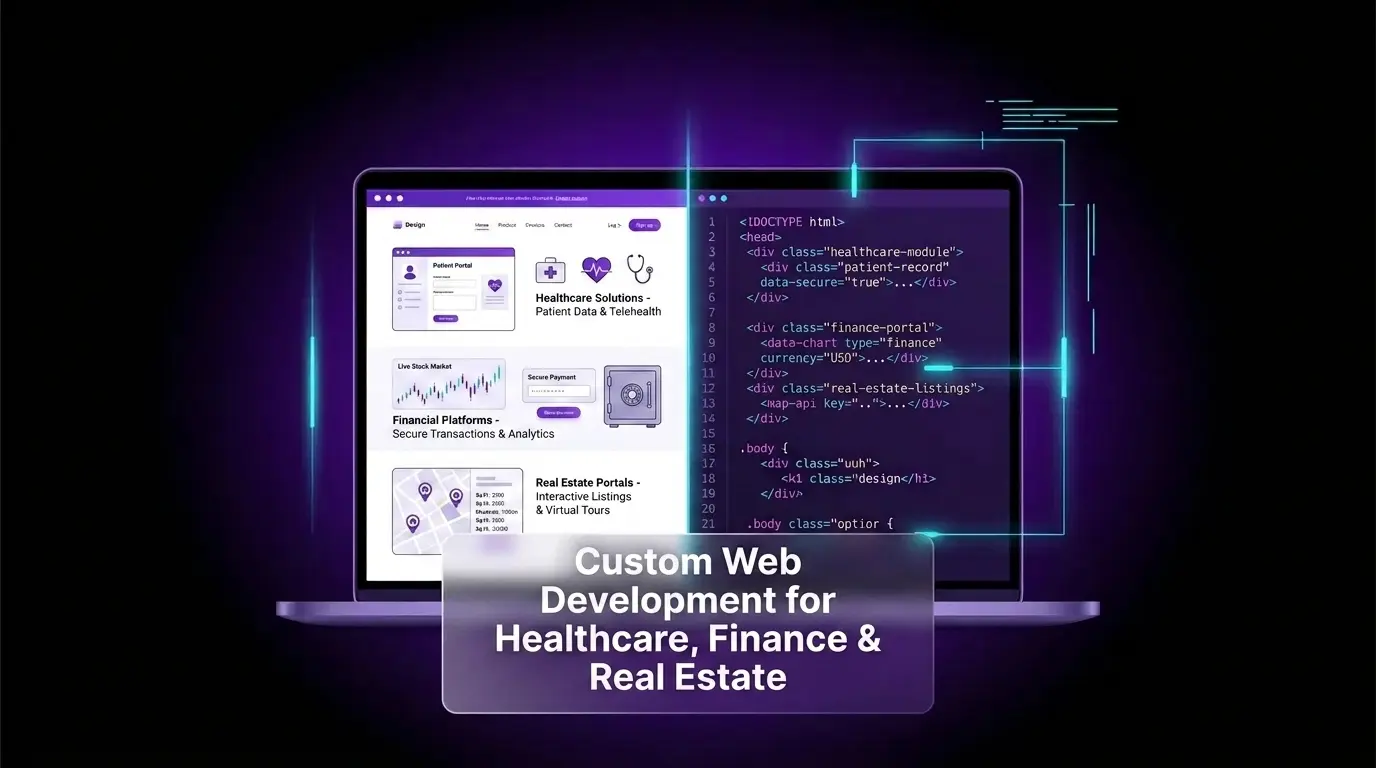
Between 2024 and 2026, while partnering with businesses on website design and development and reviewing enquiry pipelines across five key industries—healthcare, financial services, tourism, eCommerce, transportation, and real estate—one pattern became impossible to ignore.
When a business experiences a poor return on investment (ROI) from their digital marketing, the first reaction is almost always the same. Some assume their Google Ads campaign is underperforming, others believe their website looks outdated, while some question their pricing or assume competitors are simply outmaneuvering them.
After analysing how visitors actually move through these websites, the evidence often points in a different direction:
- The issue isn't always the advertising campaign.
- The issue isn't always the visual design.
- Instead, the website itself has rarely been engineered around the specific way that particular business generates enquiries.
A website is not merely a digital ornament or a design asset to maintain. It is a functional part of your sales process. Every visitor arrives with a unique intent, every business requires specific information to qualify a lead, and every enquiry follows a different path. Yet, many websites are built using a template structure, regardless of the industry.
This approach might seem sufficient initially, but the cracks begin to show once a business starts investing in digital marketing. As traffic increases, structural weaknesses become visible:
- High abandonment rates: Visitors leave because they cannot find immediate answers.
- Incomplete lead data: Forms fail to collect the right details, leading to administrative bottlenecks.
- Friction in the user journey: The path to making an enquiry is confusing or overly complex.
Ultimately, businesses end up spending more money to attract traffic, when the real bottleneck is what happens after the visitor lands on the site.
Why Most Businesses Misdiagnose Poor ROI
Poor ROI is frequently blamed on the wrong factors. For example, a business might:
- Redesign the homepage simply because they feel the current layout looks old.
- Increase the Google Ads budget, hoping sheer volume will fix a low conversion rate.
- Lower prices, assuming cost is the primary barrier for potential customers.
However, analytics data usually reveals a different story. Visitors are arriving, spending time reading, and navigating through multiple pages—but they leave without making contact.
This usually happens because of unnecessary friction. Instead of guiding visitors toward an enquiry, the site forces them to search through menus, read multiple service pages, locate a contact form, and figure out what details they need to provide. Every additional decision point increases the likelihood of abandonment.
In modern business, we often talk about offering "solutions" rather than just products. But a solution is only valuable if it is accessible. There is a fitting quote that highlights this challenge:
"Problem-solving is a great business, but it's annoying when solving the problem itself becomes a problem."
A successful website works by:
- Answering core questions before the visitor has to ask them.
- Building trust through highly relevant, clear content.
- Simplifying the enquiry process so it feels completely effortless.
Every Industry Has a Different Conversion Pipeline
This is where generic website designs usually fail. Every business requires different details before they can deliver a service:
- Restaurants might only need a date, time, and number of guests.
- Financial consultants need to understand a client's financial objectives before booking a consultation.
- Healthcare providers require appointment preferences, treatment selection, and insurance details.
- Real estate agencies need property type, budget, location preferences, and buying intent before assigning a lead to an agent.
These varying needs change how a website should be planned, structured, and developed. Using a generic contact form across different industries creates unnecessary work for both the visitor and your team.
The goal isn't just to gather more enquiries; it is to gather qualified enquiries. This requires understanding how each industry operates before writing a single line of code.
Healthcare Website Development
Healthcare websites have one primary responsibility: reduce patient hesitation while making it simple to request assistance.
Unlike other sectors, healthcare providers need specific details to confirm an appointment. If this data isn't collected efficiently during the initial touchpoint, staff must spend valuable time following up on incomplete enquiries.
To address this, healthcare websites should be structured around the patient’s decision-making journey:
- Treatment-specific landing pages: These allow patients to find relevant medical details without navigating through unrelated services.
- Trust-building elements: High-quality photography, doctor profiles, and clear explanations of procedures help ease anxiety and build confidence.
- Performance optimization: Because medical sites rely on media-rich content, fast loading speeds, image optimization, and strong Core Web Vitals are essential to prevent frustrated exits.
- Accessible calls to action: Rather than forcing users to find a separate contact page, prominent booking buttons or sticky navigation options allow patients to initiate an enquiry at any point in their browse.
Financial Services Website Development
In financial services, conversion relies heavily on trust, compliance, and qualification. Whether the service is accounting, wealth management, or corporate finance, visitors rarely make contact after reading just one page. They need to evaluate credibility first.
A financial services website should be structured to educate and qualify prospects before they reach out:
- Targeted intake forms: Instead of a basic "contact us" box, use structured fields to gather key details (such as the type of service required, personal vs. business inquiry, and estimated budget).
- Robust security measures: Because financial discussions involve sensitive data, secure forms, encryption, and secure document upload features are critical for protecting customer data and building trust.
- Clear, logical navigation: Prospects often compare multiple firms. A fast, well-structured website helps them find fee structures, service coverages, and advisor credentials quickly, keeping them engaged.
Ultimately, a financial website succeeds when it answers regulatory and practical questions upfront, filters out unqualified leads, and prepares both the advisor and the client for a productive first meeting.
Real Estate Website Development
Real estate websites generate some of the most valuable enquiries online. Because of this, every enquiry should arrive with enough context for your sales team to take immediate, meaningful action.
An agency cannot work effectively with a generic "Contact Us" message. Agents need to understand exactly what a prospect is looking for before making that first phone call.
To streamline this process, a well-engineered real estate website should collect specific details upfront:
- Property Preferences: Preferred location, property type, and minimum number of bedrooms.
- Financial Scope: Estimated budget range and financing requirements (e.g., pre-approved or cash buyer).
- Buying Intent: Intended use (investment property or primary residence) and urgency.
- Communication Preferences: Preferred contact method and best times to reach them.
Gathering these details during the first interaction allows enquiries to be automatically prioritised and routed to the right agent.
Because real estate websites rely on high-resolution photography, virtual tours, promotional videos, and interactive maps, performance optimization is critical. Without proper image compression, lazy loading, caching, and a content delivery network (CDN), these heavy media assets will slow down the site and drive frustrated visitors away.
Furthermore, every property promoted through paid advertising should direct visitors to a dedicated listing page rather than a generic homepage. Implementing structured data (schema markup), fast search filters, and seamless CRM integrations will dramatically reduce manual follow-ups and improve your team's overall efficiency.
Tourism Website Development
Tourism websites must answer a high volume of logistical questions before a traveller feels comfortable making an enquiry.
Before booking, visitors are typically evaluating multiple factors simultaneously:
- Logistics: Travel dates, accommodation standards, and transport options.
- Requirements: Visa assistance, cancellation policies, and payment terms.
- Value: Package pricing, included activities, and overall itinerary details.
If your website fails to organise this information clearly, visitors will quickly leave to compare options on a competitor’s site.
To prevent this, tourism websites should be structured around destination-specific landing pages rather than a single, generic holiday page. Each landing page should focus on a single destination or package, allowing visitors to request a custom quote without having to navigate away.
Visual storytelling is central to the travel industry. However, large image galleries and promotional videos must be compressed and delivered efficiently to maintain strong Core Web Vitals.
Your enquiry forms should gather practical details—such as travel dates, passenger counts, departure points, and estimated budgets—so your consultants can spend their first call proposing tailored itineraries rather than asking basic qualifying questions.
eCommerce Website Development
A common misconception is that an eCommerce website only requires a product list and a checkout page. In reality, high-performing eCommerce platforms are engineered to systematically reduce friction at every step of the buying journey.
Because site performance directly impacts revenue, even minor delays can hurt your bottom line. Slow loading times, unoptimized mobile layouts, or overly complex checkouts lead directly to cart abandonment.
To keep users moving toward a purchase, modern eCommerce development should focus on several core pillars:
- Intuitive Navigation: Smart search bars, dynamic product filtering, and clear categorization.
- Confidence Builders: Transparent delivery estimators, live stock availability, product comparisons, and genuine customer reviews.
- Technical Integrity: Fast-loading product pages, secure payment gateways, inventory synchronization, and structured product data.
For businesses selling high-value items, customized products, or wholesale/B2B goods, a "Request a Quote" option or a consultation form often performs better than a standard checkout. In these scenarios, the website's role is to remove uncertainty and open a direct channel of communication.
Why Landing Pages Matter More Than Homepages
One of the most frequent web development mistakes is directing all paid advertising traffic to a website's homepage.
While a homepage is designed to introduce your brand as a whole, a landing page is engineered to solve a specific problem.
- If a user searches for dental implants, they should land on a page dedicated to implant procedures—not a generic clinic homepage.
- If they search for beachfront apartments, they expect to see immediate listings, pricing, and viewing options, rather than having to search the entire site.
Effective landing pages act as a direct continuation of your advertisement. They provide highly focused information, relevant media, specific trust signals, targeted FAQs, and a prominent enquiry form. By removing unnecessary steps, you create a direct path to conversion.
Aligning Your Website with Your Business Process
Before any design or development work begins, it is essential to map out how your business handles sales and operations.
Answering these architectural questions early ensures your website actively supports your team:
- What specific details do you need before providing a consultation or quote?
- How should incoming enquiries be prioritized and routed?
- Do your prospects need to upload supporting documents during the signup process?
- Are visitors able to complete their intended action from a single page?
- Which specific pages will be used as destination links for your marketing campaigns?
Addressing these workflows before writing code results in a custom digital asset that fits your business, rather than forcing your business to adapt to a generic template.
Final Thoughts
A template-based, one-size-fits-all website rarely delivers consistent results across different business models.
Healthcare providers, financial advisors, real estate agencies, tourism operators, and eCommerce brands all interact with their customers differently. A successful business website should reflect these distinct journeys through purposeful architecture, industry-specific conversion funnels, strong technical performance, and secure, reliable development.
Frequently Asked Questions
Can every business use the same website structure?
No. Different industries require different types of customer information, follow unique sales processes, and serve users with varying intents.
Why are landing pages preferred over homepages for marketing campaigns?
Landing pages focus entirely on a single offer or service, minimizing distractions and providing a direct, simple path for the visitor to get in touch.
Does website speed affect conversion rates?
Yes. Slow loading speeds are one of the primary causes of page abandonment, particularly on mobile devices. Optimizing performance is a critical part of professional development.
An enquiry form should collect enough data to qualify the lead and prepare your sales team, without adding so much friction that the visitor abandons the form. Finding this balance depends on your specific industry.
Is website development only about the visual design?
No. While visual design is important, professional website development also encompasses pipeline planning, speed optimization, security protocols, structured data, accessibility, and user experience.
Summary
The most effective websites are tailored to the specific ways an industry attracts, informs, and qualifies its prospects. Whether your business operates in healthcare, financial services, tourism, real estate, or retail, your website should function as an integrated extension of your everyday sales process.
To learn more about tailored digital solutions, explore our Website Developer USA services, view our specialized Website Development Austin offerings, or visit Onlinetist for further insights into professional development, speed optimization, and security practices.
Resources
References
- Google Search Central – Core Web Vitals
- Nielsen Norman Group – Landing Page UX Research
- Google Analytics Documentation
- Google Search Central – Page Experience
External Links