SEO Friendly Web Design — What Developers Never Tell You
SEO is not something added after a website is built. It starts at the first line of code. Here is what most developers in Dubai never tell their clients.
SEO is not something added after a website is built. It starts at the first line of code. Here is what most developers in Dubai never tell their clients.
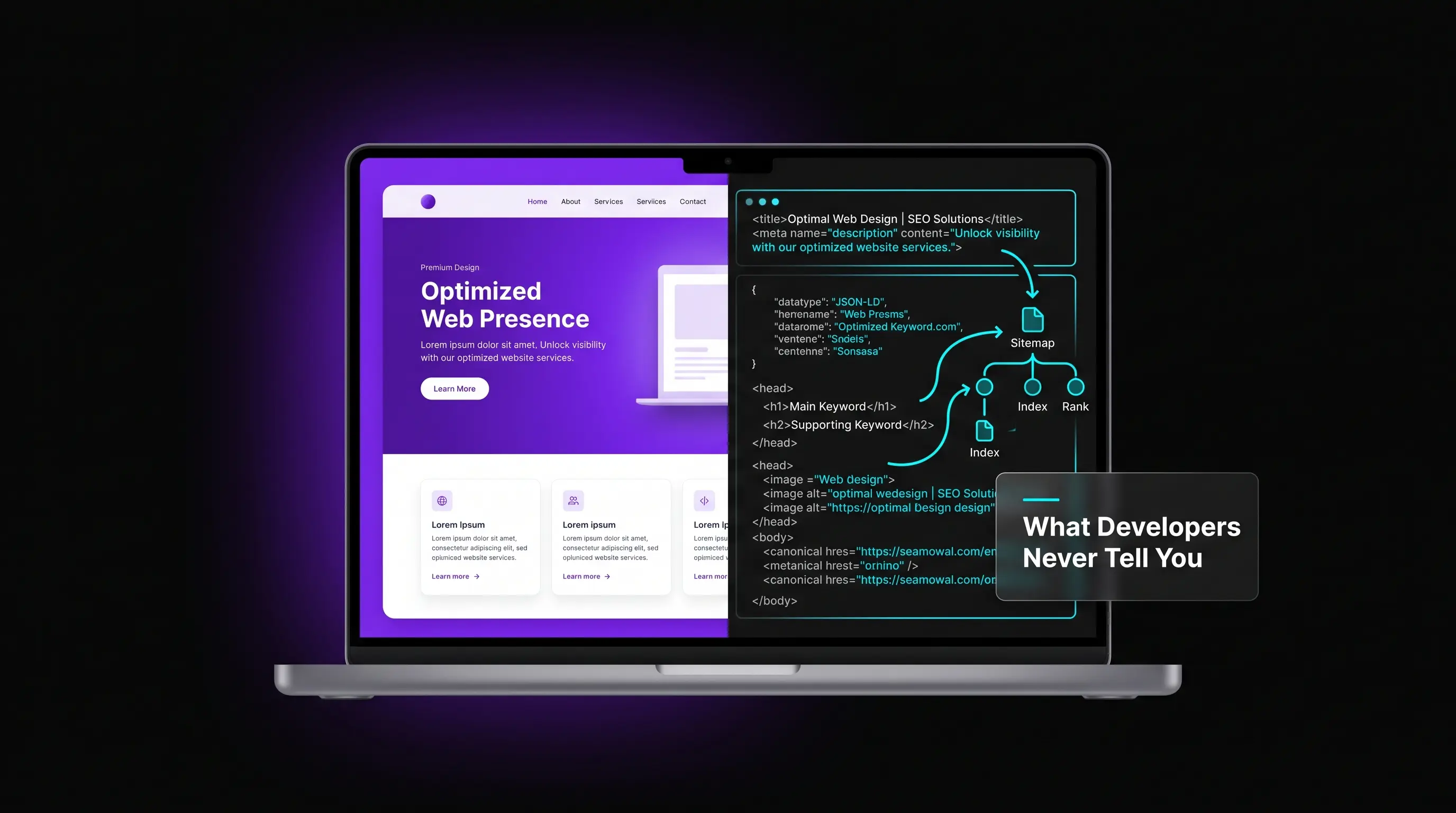
When businesses in Dubai search for a web design and SEO company, they usually expect two separate things — a good-looking website and SEO added on top of it. What most developers never explain is that SEO does not work that way. If the website is not built with search engines in mind from the very first line of code, adding SEO later becomes significantly harder and more expensive.
This is one of the most common problems businesses face after launching a new website. The design looks professional, the content is ready, but the website simply does not appear in Google search results for the services the business offers.
Many developers treat SEO as a separate task. They build the website first, hand it over, and suggest adding SEO later through a plugin or a marketing agency.
The problem is that SEO is not a layer you apply on top of a finished website. It is built into the structure of how the website is coded.
When a developer writes the HTML, sets up the heading structure, decides how pages load, chooses how images are handled, and determines how the website responds on mobile devices — every one of those decisions affects how Google reads and ranks the website.
Changing these things after the website is live requires going back into the code and rebuilding sections that should have been done correctly the first time.
The majority of web developers in Dubai focus on how the website looks, not how Google reads it. This leaves businesses with websites that appear finished but contain technical problems that quietly prevent them from ranking.
Common things developers skip include:
Google announced Core Web Vitals as an official ranking factor. These are three measurements that tell Google how a page performs for a real visitor:
A website built with heavy page builders, unoptimised images, multiple conflicting stylesheets, and unnecessary JavaScript will fail these measurements. A custom-coded website built with performance in mind will pass them consistently.
You can check any website's Core Web Vitals score at Google PageSpeed Insights. Paste the URL and click Analyse. The results show exactly where the website is passing or failing.
Structured data is code added to a website that helps Google understand the content in a more specific way. It is written in a format called Schema markup and tells Google things like what type of business the website represents, what services are offered, where the business is located, what reviews exist, and what questions are answered on the page.
When structured data is implemented correctly, Google can display additional information directly in the search results — star ratings, business hours, FAQ answers, and price ranges — without the visitor needing to click through to the website first.
Types of structured data relevant to most Dubai businesses include:
Most template-based websites and standard WordPress themes have no structured data at all. It needs to be written into the code manually or through a properly configured plugin.
An SEO ready website is not something you can see by looking at the design. It is visible in the code, the page structure, the loading speed, and the technical setup.
When a website is built with SEO from the first line of code, it includes:
Before hiring a developer or agency to build your website, ask these questions directly:
If the developer cannot answer these questions clearly, SEO was not part of their development plan.
Does every website need SEO from the start? Yes. The technical foundation of a website determines how well SEO can ever perform on it. Starting with a poorly built website and trying to fix it later costs more time and money than building it correctly from the beginning.
Can a plugin handle all the SEO for a WordPress website? A plugin like Yoast or Rank Math can help manage titles, descriptions, and sitemaps, but it cannot fix poor code structure, slow loading speed, missing structured data, or incorrect heading hierarchy. These need to be addressed during development.
What is the difference between on-page SEO and technical SEO? On-page SEO refers to the content and keywords on a page. Technical SEO refers to how the website is built — its speed, structure, code quality, and how Google is able to crawl and index it. Both matter, but technical SEO determines the ceiling for everything else.
How do I know if my current website has technical SEO problems? Go to Google PageSpeed Insights and enter your website URL. The results will show speed issues, Core Web Vitals scores, and specific problems to address. Google Search Console also shows indexing errors and coverage issues for free.
Is SEO friendly web design only relevant for Google? Primarily yes, since Google handles the majority of search traffic in the UAE and globally. However, a well-structured website with clean code and fast loading speed also performs better on Bing and other search engines.
SEO friendly web design is not a feature that gets added to a website after it is built. It is the result of how the website is developed from the beginning. The heading structure, code quality, loading speed, image handling, structured data, and page architecture all contribute to whether Google ranks the website or ignores it.
For businesses in Dubai looking for a web design and SEO company, the most important question to ask is not what SEO services are offered after launch. It is whether SEO is considered during the development process itself.