Custom Software Development Dubai Solution to Cost
When off-the-shelf tools no longer fit how your business works, custom software is the answer. Here is what it covers and what it costs in Dubai.
When off-the-shelf tools no longer fit how your business works, custom software is the answer. Here is what it covers and what it costs in Dubai.
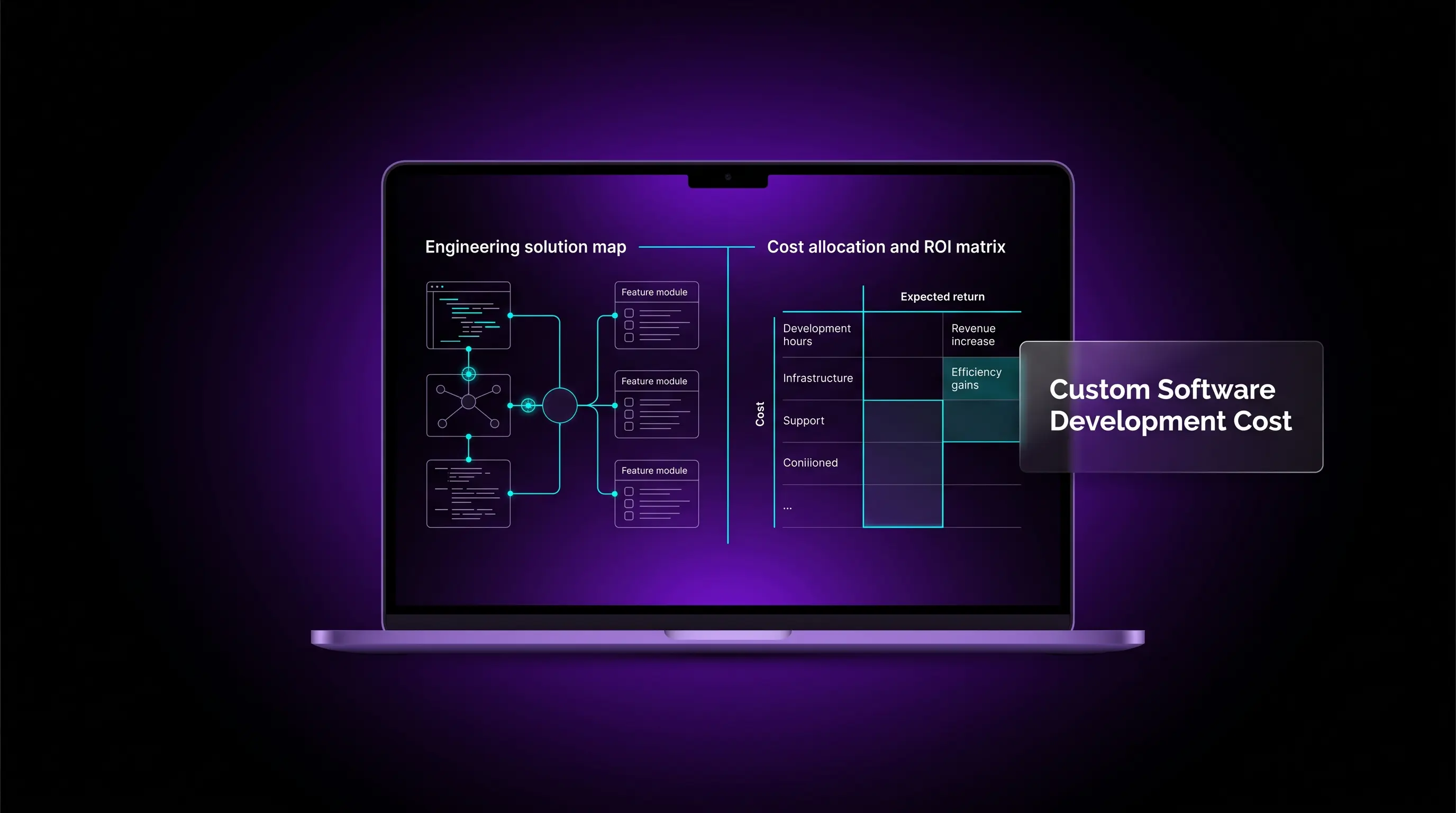
Most businesses in Dubai reach a point where the tools they are using no longer fit the way they work. The spreadsheet becomes too complex, the off-the-shelf software does not cover a specific process, or the team is spending hours on manual tasks that should be automated. This is where custom software development becomes relevant — not as a luxury, but as a practical solution to a specific business problem.
Custom software is a system built specifically for one business and its processes. Unlike off-the-shelf tools that are designed to serve as many businesses as possible, custom software is built around how a particular business actually operates.
This can be a client portal, an internal management dashboard, an inventory system, an automated reporting tool, a booking platform, or any other system the business needs that does not exist as a ready-made product — or exists but does not fit closely enough.
The development process involves understanding the business's specific requirements, designing the system around those requirements, building it, testing it, and delivering something the business owns entirely.
Custom software development in Dubai covers a wide range of business needs. Some of the most commonly requested include:
Off-the-shelf software — tools like standard CRMs, project management platforms, or inventory systems — works well for businesses whose processes fit the way the tool was designed. When the fit is close enough, there is no reason to build something custom.
The problems begin when the business has to change how it operates to fit the software, rather than the software fitting the business.
Common signs that off-the-shelf tools are no longer sufficient:
A custom-built system addresses these problems directly because it is designed around the actual workflow, not a generic version of it.
On cost, off-the-shelf tools appear cheaper initially because the cost is spread across monthly subscriptions. Over three to five years, the cumulative subscription cost of multiple tools often exceeds the one-time cost of a custom system that covers everything the business needs in one place.
A custom software project typically follows these stages:
Choosing a software developer or development company in Dubai requires more care than choosing a web designer, because the investment is higher and the dependency on the delivered system is greater.
Key things to verify before committing:
Custom software development costs in Dubai vary significantly depending on the complexity of the system, the number of users, the integrations required, and the development approach used.
General ranges:
These are starting points. The actual cost for any project is determined by the requirements gathered during the initial consultation.
How long does custom software development take? A simple system takes between four and eight weeks. A mid-complexity system typically takes three to six months. Enterprise-level systems can take six months to over a year. Timeline depends entirely on the scope defined during requirements gathering.
Who owns the software after it is delivered? The client should own the source code, the database, and all related files after delivery. This should be confirmed in the contract before the project begins. Some companies retain ownership or licence the software to the client, which creates dependency on the developer for future changes.
Can custom software be updated or expanded later? Yes. A well-built system is designed to be maintained and expanded. New features, additional user roles, or integrations with new tools can be added after the initial delivery. The cost of additions depends on the scope of what is needed.
Is custom software development only for large businesses? No. Many small and medium businesses in Dubai invest in custom software when a specific operational problem cannot be solved efficiently with off-the-shelf tools. The decision is based on the problem being solved and the return on investment, not the size of the business.
What technology is used to build custom software? The technology depends on the requirements. Common choices include PHP with Laravel for web-based business systems, Python for data-heavy applications, and React or Vue for user interfaces. The right technology is chosen based on what the system needs to do, not on preference or trend.
Custom software development in Dubai is a practical investment for businesses that have specific operational problems that standard tools cannot solve. The cost is higher than an off-the-shelf subscription, but the result is a system built around how the business actually works, owned entirely by the business, and expandable as the business grows.
The decision to invest in custom software usually comes after the cost of workarounds, disconnected tools, and manual processes becomes greater than the cost of building something that works correctly from the start.